Burn Gummy Official Website › Blog › What Is Not On The Label
What Is Not On The Burn Gummy Label
One contradicted claim, one overstated dose claim, two numbers that disagree with the sales page, six unpublished figures and three photographs that are not this product. From the desk that sells it.
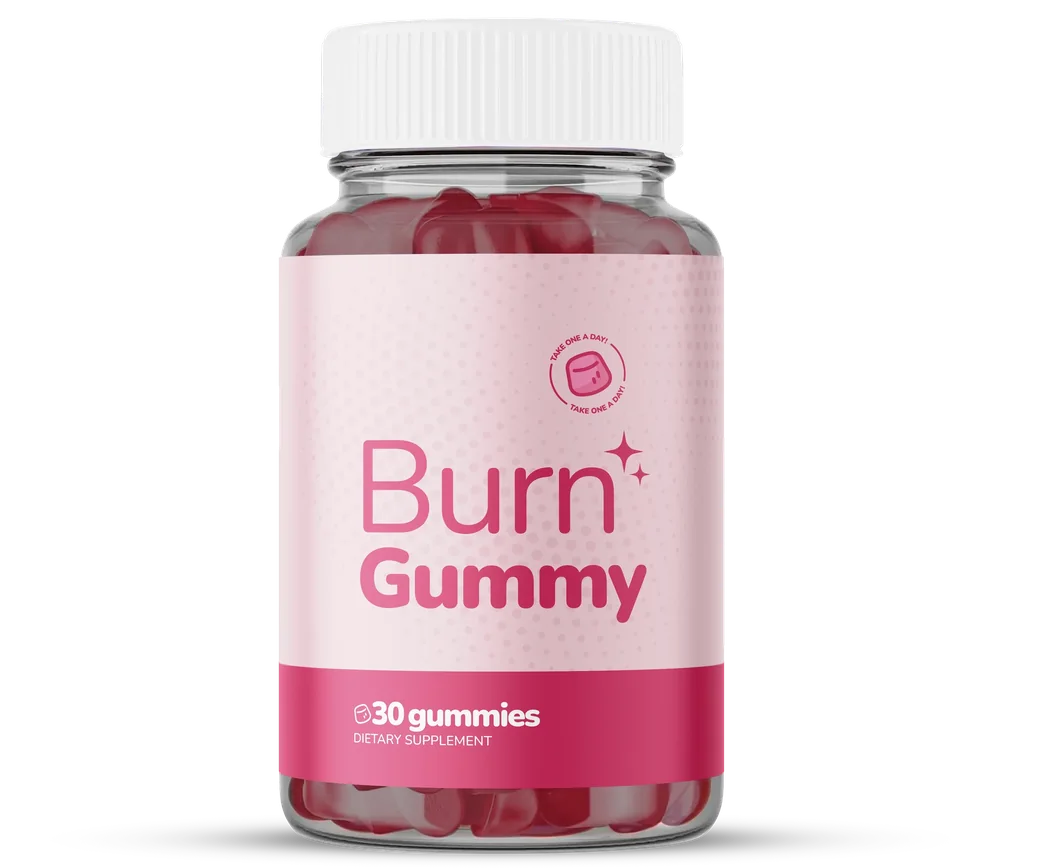
- The sales page says no artificial colours. The panel lists FD&C Red 40.
- The sales page says the doses studies actually used. They are not, and the gap is large on all three actives.
- Six figures are not published at all, including the extract ratio and the batch certificate.
- None of that makes the product unsafe. All of it makes it less checkable than it should be.
General information, not medical advice. Burn Gummy is a dietary supplement for healthy adults aged 18 and over. It is not a drug, it is not FDA-approved, and it is not intended to diagnose, treat, cure or prevent any disease. Blood sugar is a medical matter: if yours is being managed, or if you take any medicine, speak to a clinician or a pharmacist before using any product on this shelf.
Why a retail desk writes this
Burngummydaily earns money when you buy this product. An article listing everything wrong with the label is therefore an odd thing to publish, so here is the reasoning rather than a claim to unusual virtue.
Everything below takes a reader about ten minutes to find independently. Discovering it after buying is a worse experience than reading it beforehand, and it produces a refund request, a poor review and a customer who never comes back. Publishing it first costs this desk some sales and saves all three of those outcomes.
There is a second reason. A page that only flatters the product it sells is a brochure, and readers in this category have been trained by experience to read brochures as noise. The only way to be believed about the good parts is to be checkably honest about the bad ones.
The colour on the panel
The seller's page states that the product is free from artificial dyes. The other-ingredients line on the printed panel ends: coloring (FD&C Red 40).
FD&C Red 40 is a certified colour additive manufactured synthetically. It is permitted, it is extremely common, and there is nothing unusual about finding it in a red confection. What is not defensible is an advertisement claiming its absence while the panel inside the bottle lists it.
The bottle also carries a natural formula badge. The same other-ingredients line includes acesulfame potassium, a synthetic high-intensity sweetener. Natural is not a defined term on a supplement panel, which is precisely why it should not be used as a seal. This desk would remove that badge, and says so on the quality page.
The dose claim
The seller's page says the three ingredients are present at the doses the studies actually used. Here is that claim against the literature.
| Ingredient | On this panel | In the research | Claim holds? |
|---|---|---|---|
| Chromium picolinate | 25 mcg | 200 to 1,000 mcg a day | No |
| Berberine HCl | 40 mg | 900 to 1,500 mg a day | No |
| Cinnamon bark extract | 28 mg | 1 g to 6 g of powder a day | No |
Sources for the right-hand column: the NIH chromium fact sheet, NCCIH on berberine and NCCIH on cinnamon.
Three rows, three noes. This is the single largest problem with how this product is advertised, and it is the reason the ingredients page on this website prints both numbers on every ingredient rather than one.
Buy Burn Gummy with the panel in front of you.
Every amount printed, every gap named, and sixty days to change your mind if it is not for you.
$207 for three bottles, $69 each
Order Burn GummyThe rating
The manufacturer's page shows 4.9 out of 5 and describes thousands of five-star reviews. This desk's own record shows 4.6 from 879 written reviews across 8,709 orders, with 90 percent saying they would recommend it.
Both figures may be honestly arrived at from different data. This website publishes the lower one, because it is the figure our records support, and because a distributor that quietly adopts the more flattering number has told you what its numbers are worth.
Thirteen percent of reviews on this desk's record are three stars or below. Three of the eight named reviewers gave it three stars, and all three are printed at the same size as the five-star ones on the reviews page.
The timeline
The seller's page says most customers report shifts in energy and cravings in seven to fourteen days. The review record this desk holds says three to four weeks, and the single most common criticism on the product is that week one did nothing.
That is not a small difference. It is the difference between a buyer judging the product before anything could plausibly have happened and judging it at a fair point, and it is the difference between a refund request at day twelve and a considered decision at day fifty. The timeline article works through it in full.
Six figures nobody publishes
Separate from the claims, there are six figures that are simply absent. None of them is estimated anywhere on this website.
- The cinnamon species. Ceylon or cassia, not stated.
- The cinnamon extract ratio. Without it, 28 milligrams of extract cannot be converted to a powder equivalent.
- A standardised marker for the berberine. Nothing states how much of the 40 milligrams is berberine itself.
- The sugar alcohol grams per serving. Total carbohydrate is printed at one gram; the maltitol and xylitol are not broken out.
- The batch certificate. Reference BUR-7625-26-BU exists. The laboratory document does not appear here, because this desk has not read it.
- Any clinical trial of the finished product. There is none. Every study cited on this site concerns an ingredient.
None of those six is unusual on this shelf. All six are usually left unsaid, which is why a list of them reads as remarkable rather than as routine.
Three photographs that are not this product
The manufacturer's image pack contains three pictures that show something other than what is in the bottle. All three are published on this website with a caption saying so, rather than being quietly dropped.
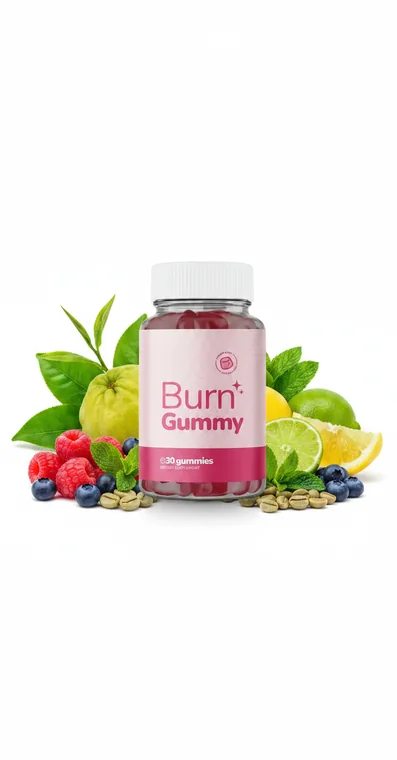
The second is a plate of assorted sugar-coated sweets, used as a hero image in the pack. Real gummies from this bottle are uniform deep red with no sugar coating, because the panel sweetens with sugar alcohols rather than sugar. The third is a blank kraft pouch with no label at all, which we publish on the batch page precisely because it is what a substitute looks like.
What this label gets right
An article like this is only fair if it also says what the bottle does well, and this one does three things better than most of its shelf.
- Every active carries an individual printed amount. No proprietary blend, nothing hidden behind a total. That single fact is what makes every criticism above possible: you can only check a label that tells you something.
- There is no hidden stimulant. No caffeine, no green tea extract, no synephrine. In a category built on stimulants that is a real point of difference.
- The panel prints its base ingredients in full. Including the colour that contradicts the advertisement, which is how we know about it.
The FDA's consumer page sets out what approval does and does not mean in this category, and the FTC's health products guidance covers the difference between a permitted label claim and a substantiated advertisement. Most of what is wrong above sits in that gap.
It is also worth naming the structural point underneath all of this. The label and the advertisement are produced by different people under different rules. A panel is compiled under labelling regulations by somebody who has to be able to defend every figure on it. A sales page is written by a marketing team under the looser discipline of advertising law, and the gap between the two is where almost every complaint in this category lives. Reading the panel first, and treating the page as an advertisement rather than as information, is the single habit that protects a buyer most.
The verdict
The product is a real dietary supplement with a printed panel, a lot number, a registered facility, a telephone number and a refund window this desk honours. The advertising around it overstates the amounts, understates the timeline and contradicts the panel on one specific point.
Buy it for the panel and the guarantee. Do not buy it for the sales page. And if the list above is enough to put you off, that is a legitimate conclusion and this desk would rather you reached it now than at day fifty. The NIH consumer factsheet is a good next five minutes either way.
Sources cited in this article
- National Institutes of Health, Office of Dietary Supplements. Chromium: Fact Sheet for Health Professionals. https://ods.od.nih.gov/factsheets/Chromium-HealthProfessional/
- National Center for Complementary and Integrative Health. Berberine and Weight Loss: What You Need To Know. https://www.nccih.nih.gov/health/berberine-and-weight-loss-what-you-need-to-know
- National Center for Complementary and Integrative Health. Cinnamon. https://www.nccih.nih.gov/health/cinnamon
- U.S. Food and Drug Administration. Questions and Answers on Dietary Supplements. https://www.fda.gov/food/information-consumers-using-dietary-supplements/questions-and-answers-dietary-supplements
- Federal Trade Commission. Health Products Compliance Guidance. https://www.ftc.gov/business-guidance/resources/health-products-compliance-guidance
- National Institutes of Health, Office of Dietary Supplements. Dietary Supplements: What You Need to Know. https://ods.od.nih.gov/factsheets/WYNTK-Consumer/

Every page, every journal post, the bottle facts and the ingredients go through review by Dr. Dyan Hes, MD before they ship. We write from the printed Burn Gummy Supplement Facts panel and this desk’s own paperwork, cite public research beside the amount that research actually used, and print “not published” wherever a figure is not disclosed rather than estimating it. Corrections are made on the page itself and the review date moves forward. Write to [email protected]. Last updated September 17, 2026.