Burn Gummy Official Website › Blog › Sugar Alcohols In Gummies
Sugar Alcohols In Gummy Supplements: A Guide
Maltitol and xylitol are how a gummy reaches zero calories, and they are the most likely cause of any digestive upset from one. What they are, how much is in a single gummy, and the dog problem.
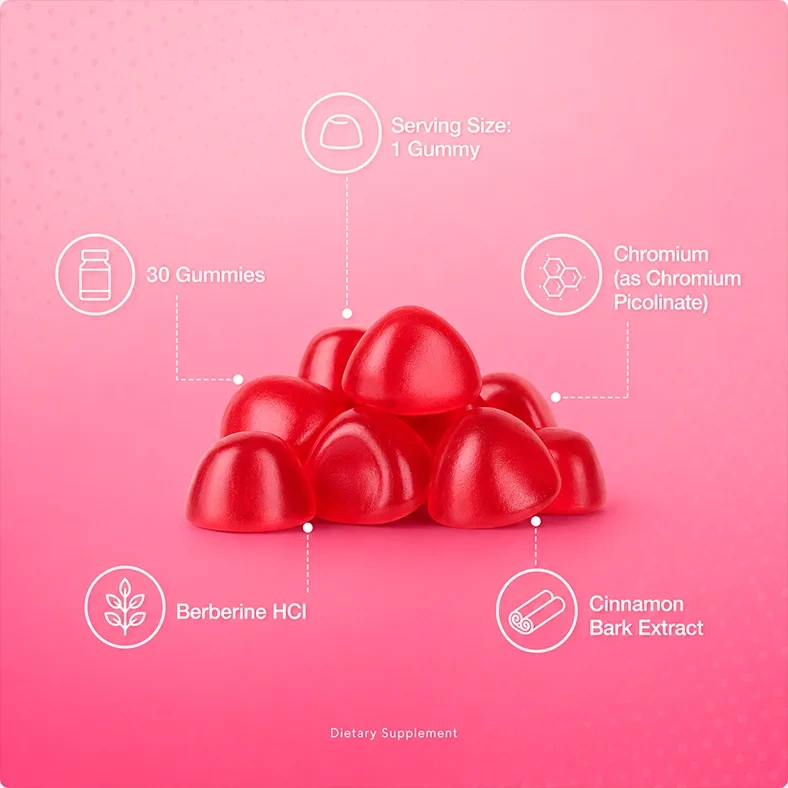
- Maltitol and xylitol are sugar alcohols, and they are how a gummy reaches zero calories.
- They are also the most likely cause of bloating or loose stools from a gummy supplement.
- Xylitol is dangerous to dogs even in small amounts, which matters more than any other line on this page.
- At one gummy a day the amounts are small, and most people notice nothing.
General information, not medical advice. Burn Gummy is a dietary supplement for healthy adults aged 18 and over. It is not a drug, it is not FDA-approved, and it is not intended to diagnose, treat, cure or prevent any disease. Blood sugar is a medical matter: if yours is being managed, or if you take any medicine, speak to a clinician or a pharmacist before using any product on this shelf.
What sugar alcohols are
Sugar alcohols are carbohydrates that taste sweet but are absorbed slowly and incompletely from the small intestine. Maltitol, xylitol, sorbitol, erythritol and isomalt are the ones you will meet. They are neither sugars nor alcohols in the everyday sense of either word, which is an unhelpful name for a useful class of ingredient.
Because they are poorly absorbed they contribute fewer calories than sugar, and because they are bulky they can replace sugar in a confection without the texture collapsing. That combination is why they dominate sugar-free sweets, mints, protein bars and, increasingly, supplement gummies.
Why gummy supplements use them
A supplement gummy has a harder job than a sweet. It has to taste good enough to be taken voluntarily every day, hold an active ingredient that is often bitter, survive a year on a shelf, and ideally not carry a sugar figure that undermines the whole proposition.
Sugar alcohols solve three of those four at once. They sweeten, they bulk, and they let a panel print a very low calorie figure. On this particular panel that produces zero calories and one gram of total carbohydrate per serving, which is a genuinely good result for a chewable.
The fourth problem, bitterness, is usually handled by adding a high-intensity sweetener on top. That is why the other-ingredients line on many gummy panels, including this one, lists four sweetening agents rather than one.
Why some people react and others do not
What is not absorbed in the small intestine continues into the colon, where two things happen: it draws water in osmotically, and gut bacteria ferment it. The first produces loose stools, the second produces gas and bloating. How much of either you get depends on the amount, on which sugar alcohol it is, and on your own gut.
That variability is why two people can eat the same sugar-free mints and have completely different afternoons. It is also why nobody can tell you in advance which group you are in, and why anyone who already avoids sugar-free products for this reason should start with the smallest bundle of any gummy supplement.
| Sugar alcohol | Typical tolerance | Notes |
|---|---|---|
| Sorbitol | Lowest | The classic culprit in sugar-free sweets |
| Maltitol | Low to moderate | Widely used because it behaves most like sugar |
| Xylitol | Moderate | Also studied for dental effects. Dangerous to dogs |
| Isomalt | Moderate | Common in hard sweets |
| Erythritol | Highest | Mostly absorbed and excreted unchanged |
This is a general ordering from the wider literature on sugar alcohols, not a statement about any particular product. Individual tolerance varies widely.
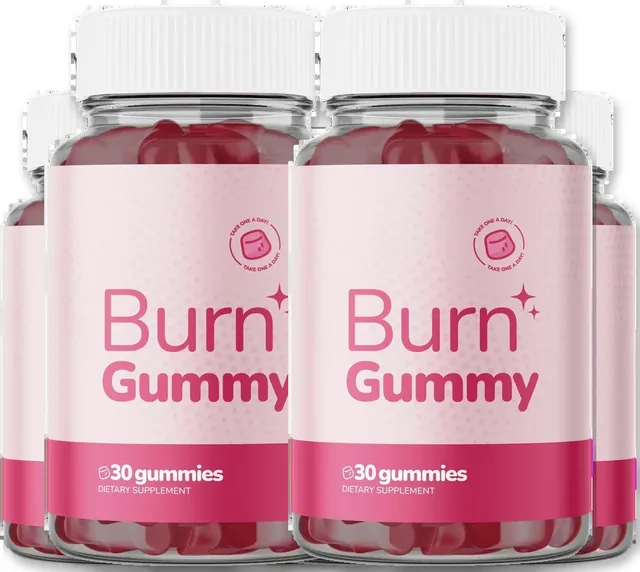
Burn Gummy prints its base list in full.
Eleven other ingredients, named on the panel, including the two sugar alcohols and the colour. A label that hides that line is a label worth distrusting.
$207 for three bottles, $69 each
Order Burn GummyHow much is in a single gummy
This is where a sense of proportion matters. The digestive effects of sugar alcohols are dose-dependent, and the doses that cause trouble are the ones found in a bag of sweets rather than in a single supplement gummy.
A panel that prints one gram of total carbohydrate per serving is telling you the whole carbohydrate contribution is one gram. Whatever share of that is maltitol and xylitol, it is a fraction of a gram. For comparison, the amounts that reliably produce symptoms in the literature on sugar alcohols are measured in tens of grams.
The exact split is not published on this panel and this desk will not estimate it. What can be said is the ceiling, and the ceiling here is low.
The xylitol and dogs problem
This is the most important paragraph on the page and it has nothing to do with whether the supplement works.
Xylitol is dangerous to dogs at small amounts. In dogs it triggers a rapid insulin release that humans do not experience, and the consequences can be severe and fast. A bottle of sweet red gummies left on a kitchen counter in a house with a dog is a genuine hazard, not a footnote.
Keep the cap on, keep the bottle in a closed cupboard, and if a dog does get into one, contact a vet immediately and use the word xylitol. Do not wait for symptoms. The same applies to sugar-free gum, mints and peanut butter, all of which are more common sources than supplements are.
Sugar alcohols and teeth
One genuine advantage, and it is the reason xylitol appears in dental products. Oral bacteria cannot ferment sugar alcohols the way they ferment sugar, so a sugar alcohol sweetened chew does not feed the process that produces acid on enamel.
That does not make a daily gummy good for teeth. It makes it considerably better than a daily sugar-sweetened one, which is a lower bar than it sounds and is still worth having. A glass of water afterwards costs nothing and removes any residue from the surfaces of the teeth.
Reading a gummy base list
Four things to look for on any gummy supplement panel, in the other-ingredients line rather than in the actives.
| What to look for | Why it matters |
|---|---|
| The gelling agent | Pectin is plant based and supports a vegetarian claim. Gelatin does not |
| The sweeteners | How many, and whether high-intensity sweeteners sit on top of sugar alcohols |
| The colour | A named synthetic dye contradicts any natural formula badge on the bottle |
| The flour or starch | Rice flour supports a gluten-free claim. A wheat starch would not |
All four are on the panel of the product this website sells, which is how this article can be specific rather than general.
One more habit, and it is the one that separates a careful reader from a hopeful one: read the base list before the actives. The actives are what you are being sold. The base is what you will actually be eating every morning for the next three months, it is where every allergen and tolerance question lives, and on this particular bottle it is where a marketing claim comes apart. A panel that prints eleven base ingredients in full has told you the truth about itself, including the parts that do not flatter it.
Practical advice if you react
- Take it with food first. A gummy on an empty stomach is the harshest version of the same amount.
- Stop for three days, then try once more. If the same thing happens both times, it is the product rather than a coincidence.
- Do not push through it. Nothing in this category is worth a fortnight of discomfort.
- Use the guarantee. A sixty-day window covering opened bottles exists for exactly this, and calling +1 (522) 127-2222 costs nothing.
NCCIH's guidance on using supplements wisely and the NIH consumer factsheet are both worth reading before starting anything on this shelf. The National Institute on Aging covers the same ground for anyone over sixty, where the interaction question matters more.
The verdict
Sugar alcohols are the reason a supplement gummy can exist at all in a form people are willing to take daily without a sugar figure attached. At one gummy a day the amounts are small and most people will notice nothing whatsoever.
If you are in the minority who react to them, you will know quickly and the guarantee covers it. If you have a dog, the bottle belongs in a cupboard rather than on a counter, and that is true of every gummy supplement in the house rather than this one in particular.
Sources cited in this article
- National Institutes of Health, Office of Dietary Supplements. Dietary Supplements: What You Need to Know. https://ods.od.nih.gov/factsheets/WYNTK-Consumer/
- National Center for Complementary and Integrative Health. Using Dietary Supplements Wisely. https://www.nccih.nih.gov/health/using-dietary-supplements-wisely
- U.S. Food and Drug Administration. Questions and Answers on Dietary Supplements. https://www.fda.gov/food/information-consumers-using-dietary-supplements/questions-and-answers-dietary-supplements
- National Institute on Aging. Dietary Supplements for Older Adults. https://www.nia.nih.gov/health/vitamins-and-supplements/dietary-supplements-older-adults

Every page, every journal post, the bottle facts and the ingredients go through review by Dr. Dyan Hes, MD before they ship. We write from the printed Burn Gummy Supplement Facts panel and this desk’s own paperwork, cite public research beside the amount that research actually used, and print “not published” wherever a figure is not disclosed rather than estimating it. Corrections are made on the page itself and the review date moves forward. Write to [email protected]. Last updated September 17, 2026.