Burn Gummy Official Website › Blog › Ceylon Or Cassia
Ceylon Or Cassia? The Cinnamon On This Label
Two different plants are sold as cinnamon, and this panel does not say which one it uses. Here is why the species matters, what the trials used, and why 28 mg of extract cannot be compared with a gram of powder.
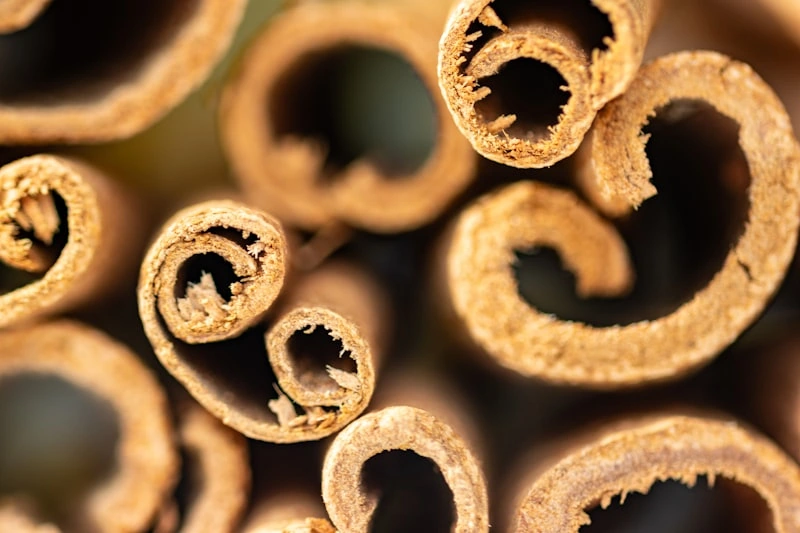
- Ceylon and cassia are different plants. Cassia is the common type in North America and carries more coumarin.
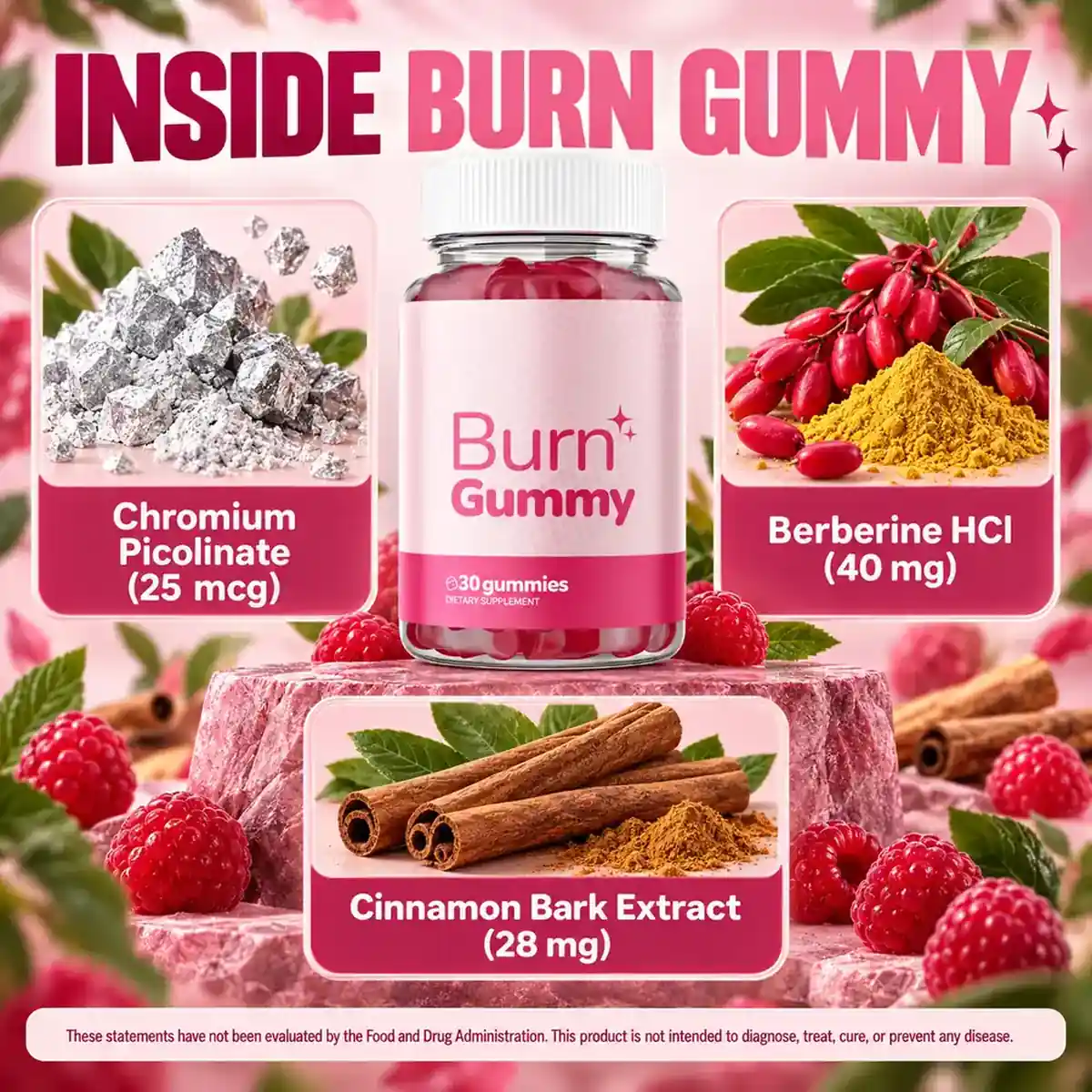
- This panel says cinnamon bark extract and does not name the species.
- The extract ratio is also not published, so 28 mg of extract cannot be compared with the grams of powder the trials used.
- NCCIH states plainly that research does not clearly support cinnamon for any health condition.
General information, not medical advice. Burn Gummy is a dietary supplement for healthy adults aged 18 and over. It is not a drug, it is not FDA-approved, and it is not intended to diagnose, treat, cure or prevent any disease. Blood sugar is a medical matter: if yours is being managed, or if you take any medicine, speak to a clinician or a pharmacist before using any product on this shelf.
Two plants, one word
The word cinnamon covers the dried bark of several Cinnamomum species, and two of them dominate. Ceylon cinnamon, Cinnamomum verum, is often called true cinnamon and grows mainly in Sri Lanka. Cassia cinnamon, Cinnamomum aromaticum, grows in south-east Asia and is, as NCCIH notes, the most common type sold in North America.
They are not interchangeable. They differ in flavour, in price and, most importantly for a supplement, in the amount of coumarin they contain. A label that says only cinnamon has told you considerably less than it appears to.
The coumarin question
Coumarin is a naturally occurring compound found at much higher levels in cassia than in Ceylon cinnamon. At high, sustained intakes it has been associated with liver effects, which is why regulators in several countries have issued guidance about heavy daily consumption of cassia powder.
At 28 milligrams of an extract, the coumarin question here is almost certainly academic. This is not a warning about this product. It is the reason the species matters in principle, and the reason a supplement that names its species has told you something a supplement that does not has withheld.
The practical version: if you are taking grams of cassia powder daily on food, the question is worth asking. If you are taking a gummy, it is not, and anybody who tells you otherwise is trading on an alarm that does not apply at this amount.
What the cinnamon trials found
Cinnamon has been studied more than most botanicals in this space and the results still do not settle.
Allen 2013 pooled ten randomised controlled trials in type 2 diabetes and reported reductions in fasting glucose, total cholesterol, LDL and triglycerides, with an increase in HDL. The full text is worth reading for the size of the confidence intervals rather than the headline. The Cochrane review looked at broadly the same literature and concluded that the evidence was insufficient to support cinnamon for diabetes. Costello 2016 walked through why the two reached different conclusions.
NCCIH puts it as flatly as a federal agency can: research does not clearly support using cinnamon for any health condition, and results are difficult to interpret partly because it is often unclear which species or part of the plant was tested.
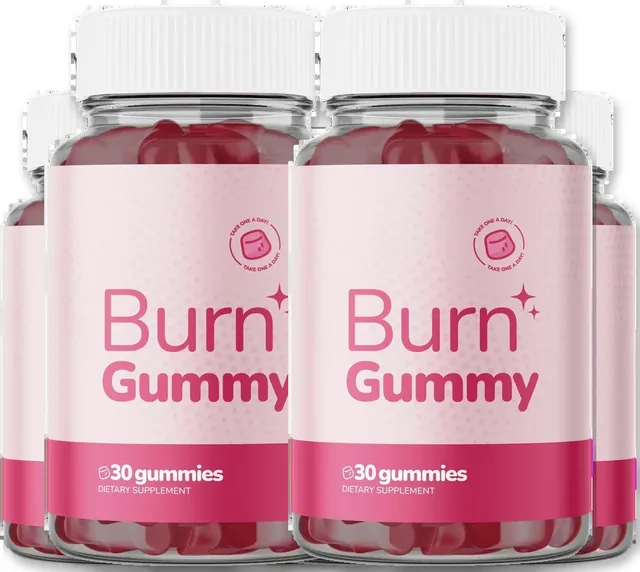
Burn Gummy prints what is in it.
Three actives, three printed amounts, no proprietary blend, and a desk that names the figures the label leaves out.
$207 for three bottles, $69 each
Order Burn GummyHow much they used
The amounts in those trials are the other half of the problem.
| The trials | This gummy | |
|---|---|---|
| Form | Cinnamon powder, usually cassia | Cinnamon bark extract, species not stated |
| Daily amount | 1 g to 6 g | 28 mg |
| Duration | Typically 12 to 16 weeks | Not studied |
| Population | Mostly type 2 diabetes | Not studied |
| Conclusion | Conflicting across reviews | No conclusion is possible |
An extract is concentrated, so these two columns are not directly comparable. Without the extract ratio, though, no comparison can be made at all.
Why extract and powder cannot be compared
This is the technical point that does the most work, so it is worth being precise. An extract is made by pulling compounds out of plant material with a solvent and concentrating what comes out. A ten-to-one extract means ten grams of raw bark produced one gram of extract.
That ratio is the conversion factor. With it, 28 milligrams of a ten-to-one extract is roughly equivalent to 280 milligrams of powder, which is still well below a gram. Without it, 28 milligrams could be equivalent to almost anything, and nobody outside the manufacturer can say which.
This panel does not publish the ratio. This desk will not estimate one, because an estimate printed on a distributor's website becomes a number people quote. Not published means not published, and that is the entire policy.
What this label does and does not say
In fairness to the bottle, it does several things well and two things poorly, and both belong in the same list.
| This panel | |
|---|---|
| Names the ingredient individually | Yes |
| Prints an individual amount | Yes, 28 mg |
| States the part of the plant | Yes, bark |
| Names the species | No |
| Publishes the extract ratio | No |
| Names a standardised marker compound | No |
Three yes rows and three no rows. The three yes rows put this ahead of any proprietary blend. The three no rows are why no comparison with the trials is possible.
Cinnamon in the kitchen against cinnamon in a bottle
Worth stating plainly, because it is the comparison a reader is entitled to. A level teaspoon of ground cinnamon is roughly two and a half grams. That is inside the range the trials used, it costs almost nothing, and it goes on porridge.
The obvious objection is that kitchen cinnamon is powder rather than extract, and that is fair, which brings us back to the missing ratio. The less obvious point is that the trials themselves used powder, so the kitchen version is the one that matches the research rather than the supplement.
None of that makes a cinnamon supplement pointless. It makes a cinnamon supplement a convenience product, and convenience is a real reason to buy something as long as you know that is what you are buying.
What to ask of any cinnamon supplement
- Which species? Ceylon or cassia, named on the label.
- Powder or extract? And if extract, at what ratio.
- Standardised to what? A marker compound and a percentage, or nothing.
- How much per serving? An individual printed amount, not a blend total.
- How does that compare to a gram? The trials used one to six of them.
Most products on the shelf fail three of those five. NCCIH's general page on herbal supplements is a useful primer on why the questions are worth asking at all, and applies well beyond cinnamon.
What a better cinnamon label would print
Criticism is cheap unless it comes with a specification, so here is exactly what this desk would want to see on a cinnamon line, in the order of how much difference each addition would make.
The species, first. Cinnamomum verum or Cinnamomum aromaticum, printed in Latin beside the common name. It is one extra word and it settles the coumarin question, the provenance question and half the comparability problem in a single stroke.
The extract ratio, second. A figure such as ten to one, printed beside the milligrams. Without it a reader cannot convert an extract amount into anything the trials would recognise, and the number on the panel is unusable for comparison however honestly it was arrived at.
A standardised marker, third. Cinnamon extracts vary enormously in what they actually contain. Standardising to a stated percentage of a named compound turns an ingredient line into a specification, which is the difference between knowing what you bought and knowing what it was called.
None of those three is expensive or exotic. They are simply not standard on this shelf, and a manufacturer that added all three would immediately have the most checkable cinnamon line in the category. Until then, the honest description of a 28 milligram cinnamon bark extract is that it is a small amount of something whose strength is not stated.
The verdict
Cinnamon is the weakest item on this panel, and this website says so rather than leaving it to a reader to work out. The evidence conflicts at the amounts that were tested, this panel carries far less than those amounts, and two of the three figures that would let you compare the two are not published.
That does not make the ingredient a problem. It makes it the third of three, and it is the reason the ingredients page puts the research amount beside every label amount rather than simply listing the names.
Sources cited in this article
- National Center for Complementary and Integrative Health. Cinnamon. https://www.nccih.nih.gov/health/cinnamon
- Allen RW, Schwartzman E, Baker WL, Coleman CI, Phung OJ. Cinnamon use in type 2 diabetes: an updated systematic review and meta-analysis. Ann Fam Med. 2013 Sep-Oct;11(5):452-9. https://pubmed.ncbi.nlm.nih.gov/24019277/
- Leach MJ, Kumar S. Cinnamon for diabetes mellitus. Cochrane Database Syst Rev. 2012 Sep 12;(9):CD007170. https://pubmed.ncbi.nlm.nih.gov/22972104/
- Costello RB, Dwyer JT, Saldanha L, Bailey RL, Merkel J, Wambogo E. Do Cinnamon Supplements Have a Role in Glycemic Control in Type 2 Diabetes? A Narrative Review. J Acad Nutr Diet. 2016 Nov;116(11):1794-1802. https://pubmed.ncbi.nlm.nih.gov/27618575/
- National Center for Complementary and Integrative Health. Dietary and Herbal Supplements. https://www.nccih.nih.gov/health/dietary-and-herbal-supplements
- Allen RW et al. Cinnamon Use in Type 2 Diabetes: An Updated Systematic Review and Meta-Analysis. Annals of Family Medicine, full text via PubMed Central. https://pmc.ncbi.nlm.nih.gov/articles/PMC3767714/
Every page, every journal post, the bottle facts and the ingredients go through review by Dr. Dyan Hes, MD before they ship. We write from the printed Burn Gummy Supplement Facts panel and this desk’s own paperwork, cite public research beside the amount that research actually used, and print “not published” wherever a figure is not disclosed rather than estimating it. Corrections are made on the page itself and the review date moves forward. Write to [email protected]. Last updated September 17, 2026.