Burn Gummy Official Website › Blog › Berberine And The Dose
Berberine At 40 mg Against The Research Dose
The berberine trials used 900 to 1,500 mg a day in divided doses. This panel carries 40 mg in one morning gummy. Here is why the gap exists, what it means, and what berberine actually does.
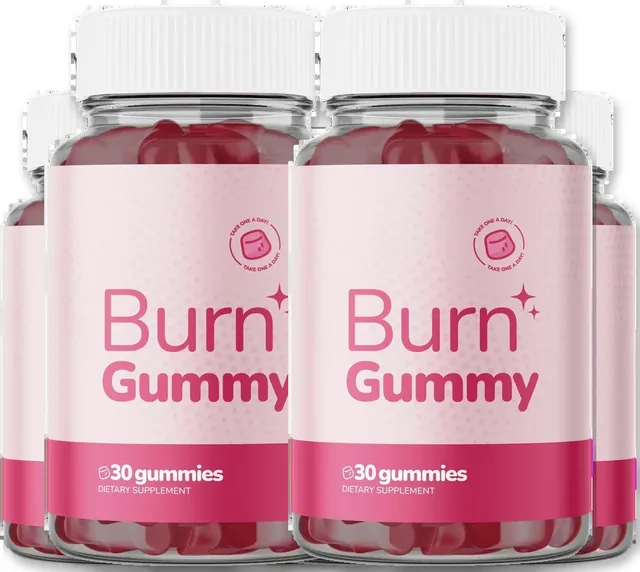
- This panel carries 40 mg of berberine HCl in a single morning gummy.
- The trials used 900 to 1,500 mg a day, split into two or three doses.
- NCCIH reports weight effects primarily above one gram a day, sustained beyond eight weeks, in studies many of which carried a high risk of bias.
- Berberine is not a free ingredient: it has a documented interaction list and a real contraindication in pregnancy.
General information, not medical advice. Burn Gummy is a dietary supplement for healthy adults aged 18 and over. It is not a drug, it is not FDA-approved, and it is not intended to diagnose, treat, cure or prevent any disease. Blood sugar is a medical matter: if yours is being managed, or if you take any medicine, speak to a clinician or a pharmacist before using any product on this shelf.
What berberine actually is
Berberine is an alkaloid found in several plants, including barberry, goldenseal and Oregon grape. It is intensely bitter and intensely yellow, and it has a long history in both Ayurvedic and Chinese medicine, mostly for infections and digestive complaints rather than for metabolism.
Modern interest is different. In the laboratory berberine activates AMP-activated protein kinase, an enzyme involved in how cells manage energy, and that mechanism is the reason it appears on metabolic supplement panels at all. It is genuinely interesting biochemistry, and it is also the point at which most product pages stop.
What the research used
The trial most often cited is Yin 2008, which gave 500 milligrams of berberine three times a day to adults with type 2 diabetes for three months. That is 1,500 milligrams a day. Lan 2015 pooled 27 trials across diabetes, lipids and blood pressure, and Guo 2021 pooled the metabolic outcomes again more recently. Across that literature the usual daily amount sits between 900 and 1,500 milligrams.
On weight specifically, NCCIH's review is the most careful public summary available. It reports that a 2022 review of eighteen studies on body weight and twenty-three on body mass index found significant decreases in both, and then qualifies that finding heavily: effects were seen primarily in people taking more than one gram a day for more than eight weeks, many of the included studies carried a high risk of bias, individual outcomes were inconsistent, formulations varied widely, most participants already had diabetes or fatty liver disease, and very few studies were conducted in North America.
That paragraph is worth reading twice, because it is the honest state of the evidence and it is six qualifications long.
The gap, in one table
Put the numbers side by side and the article more or less writes itself.
| This gummy | The trials | |
|---|---|---|
| Berberine per serving | 40 mg | 500 mg |
| Servings per day | 1 | 2 or 3 |
| Berberine per day | 40 mg | 1,000 to 1,500 mg |
| As a fraction of the trial amount | About 3 percent | 100 percent |
| Study duration | Not studied | 8 to 12 weeks typically |
| Population studied | Not studied | Mostly type 2 diabetes or metabolic syndrome |
Forty milligrams is roughly one twenty-fifth of a gram-a-day regimen, delivered in one morning dose rather than three across the day.
This is not a marginal difference of the kind that might wash out in a meta-analysis. It is a factor of twenty-five, and it is the single most useful thing to know before buying any berberine gummy from anybody.
Buy Burn Gummy for what it is.
Three named actives, every amount printed on the panel, and a desk that prints the research amount next to each one.
$207 for three bottles, $69 each
Order Burn GummyWhy the trials split the dose
The dosing schedule in the literature is not arbitrary. Berberine is poorly absorbed from the gut and clears relatively quickly, so a single large dose produces a brief peak and then very little. Splitting it across meals is how the trials maintained any exposure at all, and it is also how they managed the gastrointestinal effects, which get worse as a single dose gets larger.
A once-daily morning gummy is therefore a different proposition from a divided regimen in two ways at once: it carries a fraction of the amount, and it delivers that fraction in the pattern the trials specifically avoided. Neither point is a scandal. Both are facts a buyer is entitled to before they compare a gummy with a capsule on price.
Why a gummy carries 40 mg
The real explanation is physical, and it is more interesting than anything on the sales page. Berberine is one of the most bitter substances used in supplements, and it is a strong yellow dye. A confection has to be small enough to chew, sweet enough to be pleasant and stable enough to sit in a bottle for a year.
There is a hard ceiling on how much bitter alkaloid survives that. Five hundred milligrams in a gummy would be inedible, and masking it would take more sweetener and more colour than the panel already carries. Forty milligrams is what fits.
That constraint also explains something else: why the gummy format wins on adherence. A capsule regimen taken three times a day is a regimen most people abandon inside a month. The five-star reviewers on this desk's record all describe the same thing, which is that the routine stuck. A small amount taken for six months and a large amount abandoned in week three are not obviously ranked, and anyone claiming otherwise is selling one of the two formats.
Does 40 mg do anything?
Nobody knows, and this is the honest answer rather than a hedge. There is no trial of berberine at 40 milligrams once daily. There is no trial of this finished gummy. What exists is a literature at twenty-five times the amount, in a different dosing pattern, mostly in people with a diagnosed metabolic condition.
A supplement desk that told you 40 milligrams reproduces those findings would be making something up. A critic who told you it certainly does nothing would also be going beyond the evidence, because absence of study is not evidence of absence. The defensible position is that the amount is far below where anything has been demonstrated, and that you should buy accordingly.
The part the marketing skips
Berberine is presented almost everywhere as a benign plant compound. It is a plant compound and it is not benign in every situation. NCCIH lists what is actually documented:
- Gastrointestinal effects are the commonly reported ones: nausea, abdominal pain, bloating, constipation and diarrhoea.
- It interacts with cyclosporine, a drug used to prevent rejection of transplanted organs.
- It has been linked to a harmful build-up of bilirubin in infants, which can cause brain damage. It is therefore likely unsafe for infants and may be unsafe during pregnancy and while breastfeeding.
That last point is a genuine contraindication rather than a precautionary sentence written by a lawyer, and it applies regardless of the amount. It is the reason this website says plainly, on every relevant page, that this product is not for anyone pregnant or nursing.
If you take any medicine that lowers blood glucose, or anything with a narrow therapeutic window handled by the liver, take the panel to a pharmacist before starting. That is a two-minute conversation and it is worth more than anything on this page.
If you want the research amount
Buy berberine capsules, not a gummy, and read the label for a divided schedule. That is the honest recommendation from a desk that sells the gummy, and the reason for making it is that a buyer who wants the trial amount and buys a gummy will be disappointed, ask for a refund, and be right to.
Two caveats on the capsule route. The trials were mostly conducted in people with a diagnosed metabolic condition, so the findings do not transfer automatically to a healthy adult. And a gram a day brings the gastrointestinal effects and the interaction list with it, at the amounts where they were actually observed.
The verdict
Berberine has the strongest research behind it of the three ingredients on this panel, and this panel carries about three percent of the amount that research used. Both halves of that sentence are true, and a product page that prints only the first half is not telling you anything.
Buy this gummy because you want one small printed-panel habit you will actually keep, with no stimulant in it and sixty days to change your mind. Do not buy it because you read something about berberine and a gram a day. Those are different purchases.
Sources cited in this article
- National Center for Complementary and Integrative Health. Berberine and Weight Loss: What You Need To Know. https://www.nccih.nih.gov/health/berberine-and-weight-loss-what-you-need-to-know
- Yin J, Xing H, Ye J. Efficacy of berberine in patients with type 2 diabetes mellitus. Metabolism. 2008 May;57(5):712-7. https://pubmed.ncbi.nlm.nih.gov/18442638/
- Lan J, Zhao Y, Dong F, Yan Z, Zheng W, Fan J, Sun G. Meta-analysis of the effect and safety of berberine in the treatment of type 2 diabetes mellitus, hyperlipemia and hypertension. J Ethnopharmacol. 2015 Feb 23;161:69-81. https://pubmed.ncbi.nlm.nih.gov/25498346/
- Guo J, Chen H, Zhang X, Lou W, Zhang P, Qiu Y, Zhang C, Wang Y, Liu WJ. The Effect of Berberine on Metabolic Profiles in Type 2 Diabetic Patients: A Systematic Review and Meta-Analysis of Randomized Controlled Trials. Oxid Med Cell Longev. 2021;2021:2074610. https://pubmed.ncbi.nlm.nih.gov/34956436/
- National Institutes of Health, Office of Dietary Supplements. Dietary Supplements: What You Need to Know. https://ods.od.nih.gov/factsheets/WYNTK-Consumer/

Every page, every journal post, the bottle facts and the ingredients go through review by Dr. Dyan Hes, MD before they ship. We write from the printed Burn Gummy Supplement Facts panel and this desk’s own paperwork, cite public research beside the amount that research actually used, and print “not published” wherever a figure is not disclosed rather than estimating it. Corrections are made on the page itself and the review date moves forward. Write to [email protected]. Last updated September 17, 2026.